Lot 5 – Kentdale
Basil and Margaret Eastoe
War Service Land Settlement Scheme

War Service Land Settlement Scheme

Farm gate memorial sign
Basil J. Eastoe was born in Melbourne and educated at Heidelberg Technical College. After working in the building industry, he turned to farming at Hagley in northern Tasmania. During the Second World War he enlisted in the Australian Army in 1941, served in the Middle East, rose to the rank of Lieutenant, and completed several years of military service before his discharge.
Following the war, Basil worked in share farming in New South Wales before moving to Flinders Island in 1953 as Assistant District Supervisor under W. N. Melrose. He proved an effective Field Supervisor with the War Service Land Settlement Scheme and was later successful in obtaining Lot 5 at Kentdale. He married Margaret, the district nurse, and together they raised two sons. A committed member of the community, Basil became actively involved in local organisations and served as both a Councillor and later Warden. He farmed Lot 5 until 1979, when family considerations prompted the sale of the property and a move to New South Wales

Basil Eastoe
Basil Eastoe's military service is recorded as Army, with the service number xxxxx. Further details of his wartime service are still being researched and may be added as additional records become available.
xx
| year | moved to Lot 5. |
Lot 5 Kentdale was part of the Emita Estate.
Historical maps and current location images will be added as research continues. Lot boundaries, house sites and later property changes may require further verification.
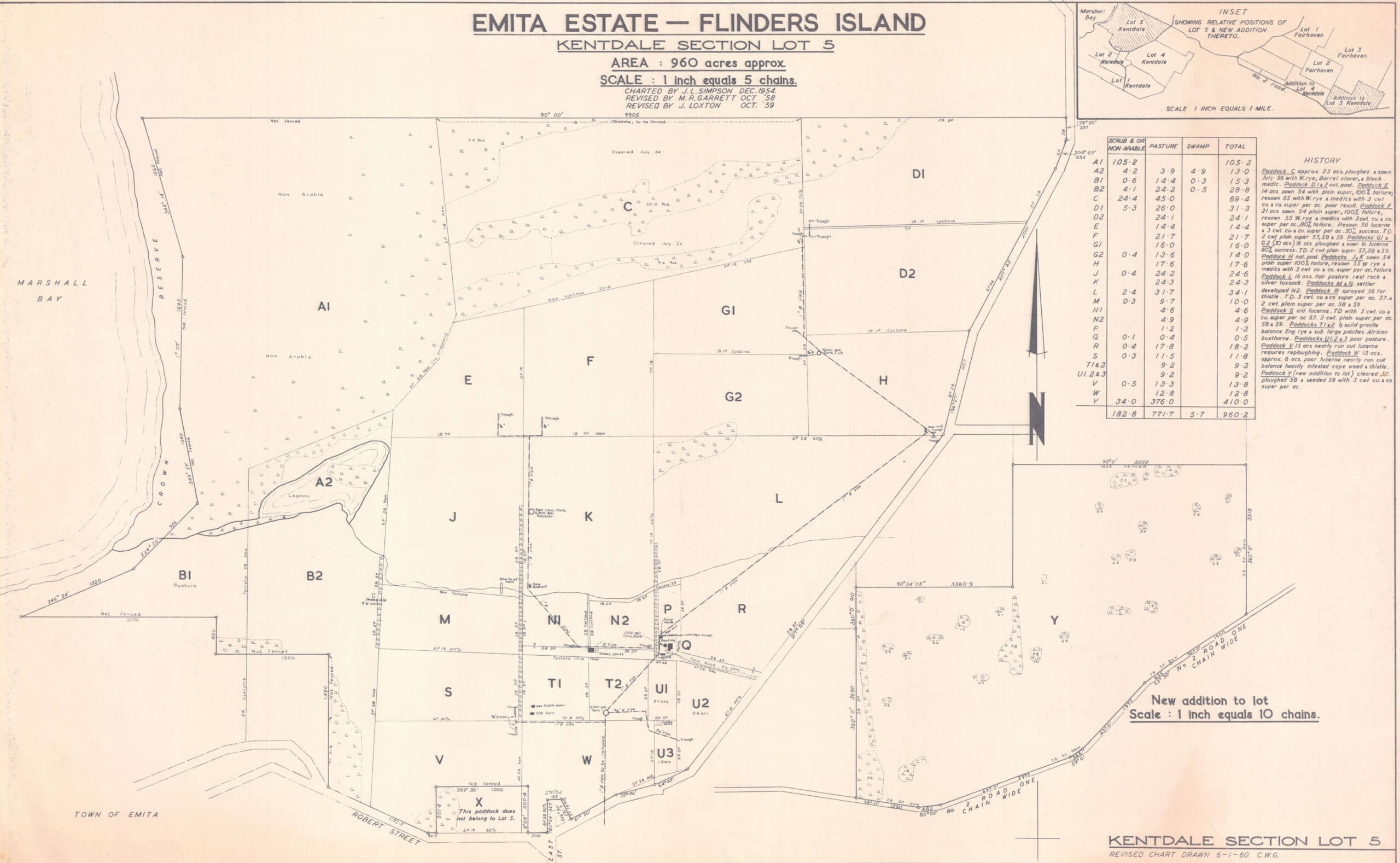
Photographs, maps, service records, family documents and newspaper items relating to Lot 5 Kentdale are being collected.
The Furneaux Museum is continuing to document the history of each soldier settlement lot.
If you have photographs, family stories, military service records, farm records, maps, newspaper articles or corrections relating to Lot 5 Kentdale, or its owners over time, we would be pleased to hear from you.
Your contribution will help preserve the history of the Soldier Settlement Scheme on Flinders Island.
Information on this page has been compiled from local soldier settlement records, family and community contributions, and ongoing research by the Furneaux Museum Soldier Settlement Scheme Working Group.
Some details may be incomplete or subject to correction as further information becomes available.