Flinders Island Soldier Settlement Scheme
The story of the War Service Land Settlement

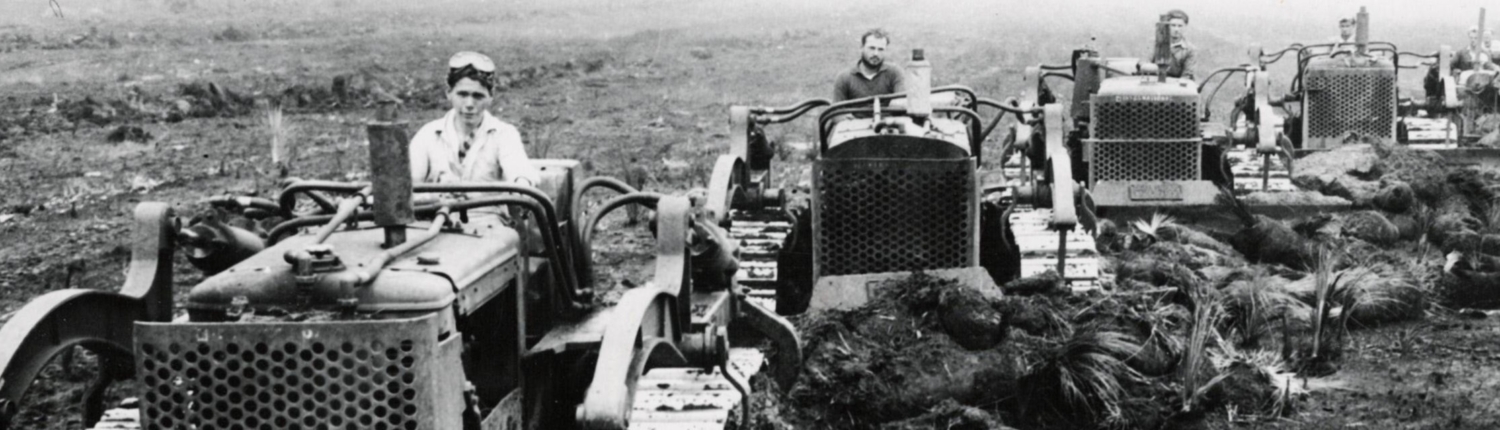
At the end of World War I, the Closer Settlement Board attempted a Soldier Settlement Scheme. There were 10 farms allotted on virgin bush. Some of these were successful.
After World War II the Commonwealth Government financed Soldier Settlement Schemes around the country under the War Service Land Settlement scheme with the aim to repatriate soldiers returning from the war. In Tasmania there were four such schemes. The Flinders Island project represents one of Tasmania’s most ambitious post-war agricultural development programs. The State Government administered the Agricultural Bank that managed the scheme.
On Flinders Island, many farms were carved from uncleared country and lagoons in the late 1950s and 1960s. The first shipment of heavy equipment was sent to Flinders Island in 1951.
The Quoin, Kentdale, Whitemark and Fairhaven Estates were settled first as these were acquired from private owners and redeveloped. The Furneaux Estate area was cleared from virgin swampy country using heavy machinery.
Establishing these farms required enormous effort. Many people contributed to this transformation —local workers, migrants, prisoners, settlers and families.
The Scheme headquarters was at Summer Camp in Memana where there was a large workshop, power generation shed, mess hall, kitchen, ablution blocks, toilets, a small shop (privately run), a pay office, fuel depot and both single men’s and married quarters.
33,559 hectares of land were cleared and sown to pasture and 87 farmers, with their families, were settled on the land.
A larger population meant improved roads, improvements to hospital, schooling, shipping, phone services and regular air services.
The Agricultural Bank completed the Soldier Settlement Scheme in 1968. They sold the buildings and machinery from 1968 to 1970.
Soldier Settlement on Flinders Island was not a single story of success or failure. It was a long negotiation between land and labour, risk and resilience, policy and people.
The legacy lives on
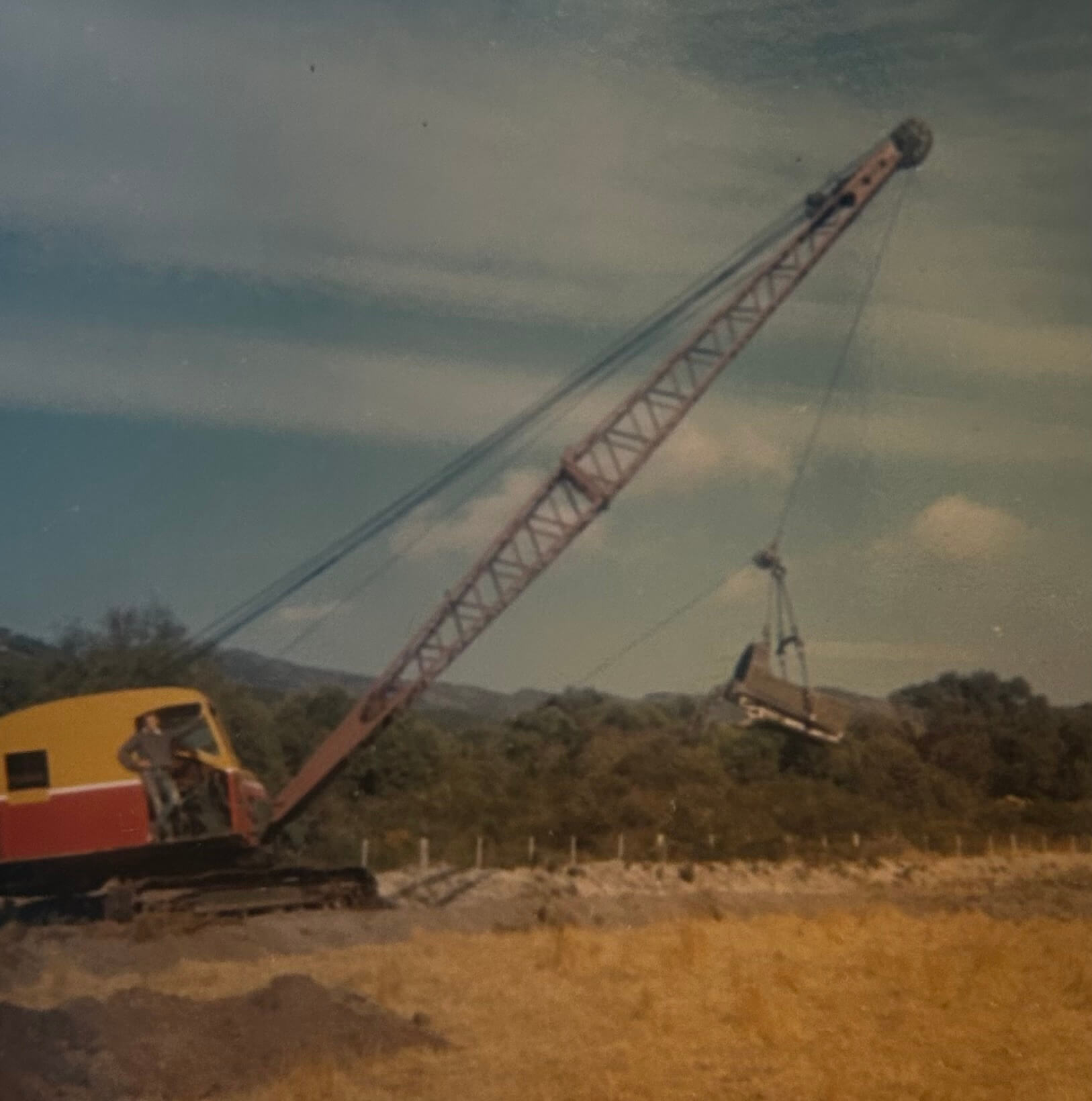
Primo Bergamin operating a Dragline, used in the drainage works. Primo was the "Last Man Standing", retiring many years after the Scheme was finished.
If you have any photos or stories to share, please Contact Us
Disclaimer: The information in the Soldier Settlement section is gathered from local soldier settlement records, family and community contributions, and ongoing research by the Furneaux Museum Soldier Settlement Scheme Working Group. Some details may be incomplete or subject to correction as further information becomes available.
Two valuable resources used are;
"The Gold Coast Settlers" - a book written by an original soldier settler, Bob Mainwaring.
"A Job Worth Doing" - a booklet written by Claire Konkes on behalf of the Furneaux Historical Research Association Inc in 2002, during the 50th anniversary of the Soldier Settlement scheme.
Quotes and references from these books are reproduced with the author or author's family's permission.