
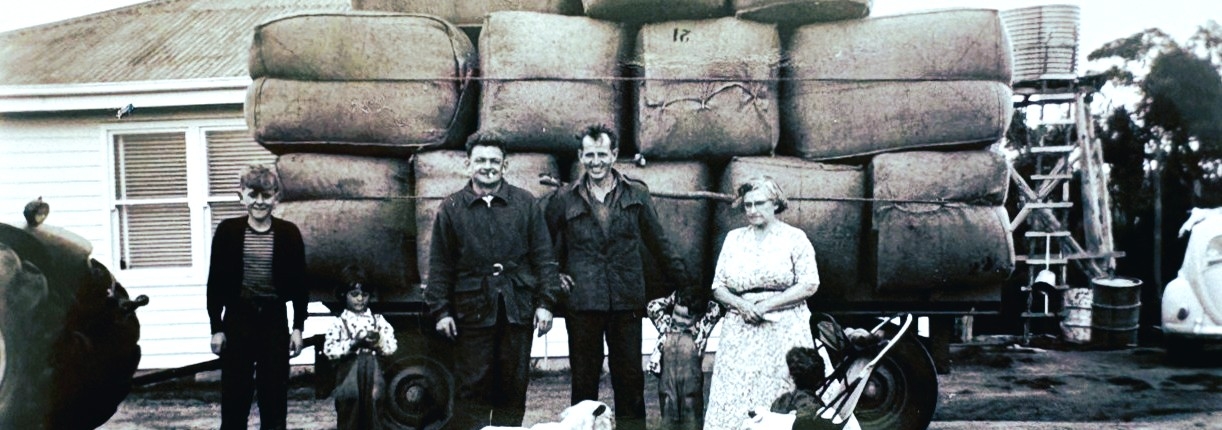
The Jubb family (Lot 26) in front of their wool bales
We Made a Life Here
When families arrived on Flinders Island under the Soldier Settlement Scheme, the land was raw and the future uncertain.
The Scheme was designed for returned servicemen, but its survival depended equally on women’s labour – practical, emotional and social.
Behind every farm were families who shared the work and the hardships of settlement.
While men cleared land and negotiated loans, women engineered daily survival.
- They ran generators that powered homes at night.
- They ordered groceries by freight from Launceston.
- They baked, gardened, preserved and stretched scarce income across long seasons.
- They raised children in huts or unfinished houses surrounded by mud, dust or water.
- They sent their high-school children to boarding school in Launceston.
The first few years were tough and lonely, especially for the migrant women who arrived with no English and whose men left the house at daylight and didn’t return until dusk.
But gradually through activities like the Country Women’s Association, tennis clubs, fundraising drives and informal support networks they built the island's social fabric and families thrived.
Settlement became more than farmland – it became a community.
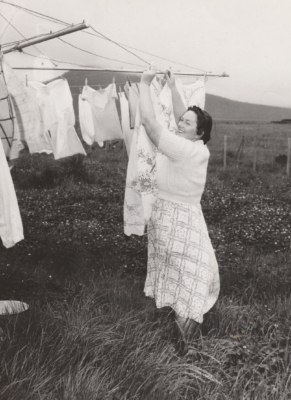
Peggy Bayles (Lot 2) hanging out the washing
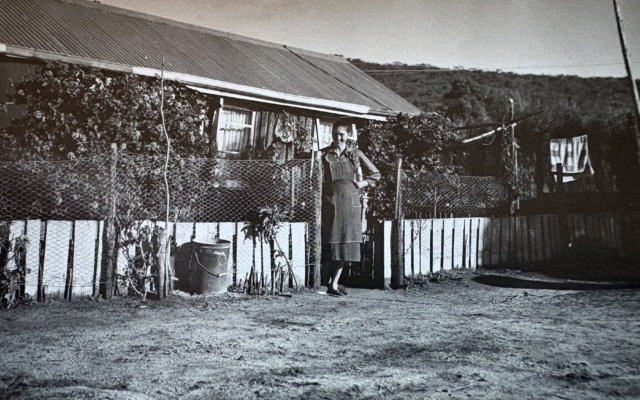
Lisa Bergamin in front of her hut at Survey Camp. The Bergamin family lived in camp for 13 years before buying Lot 40 from the original soldier settler.