
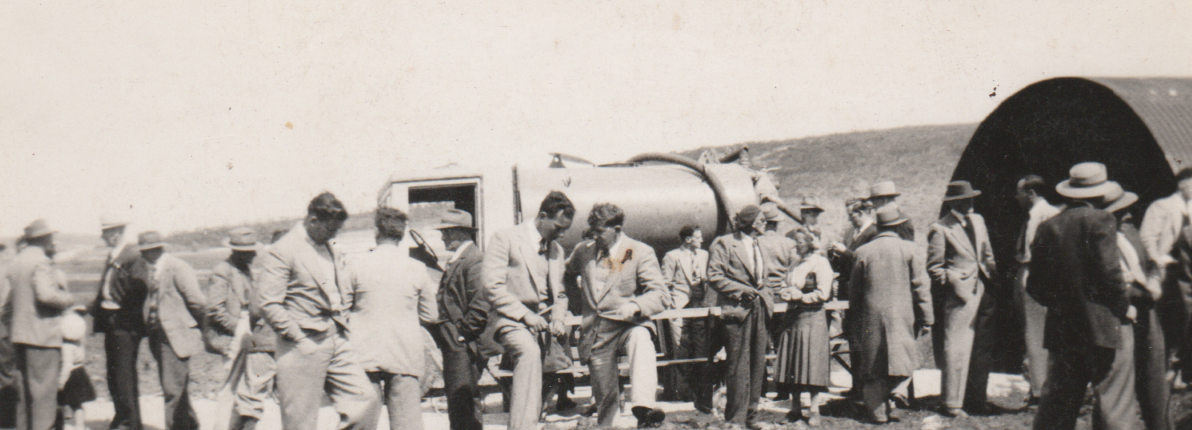
A farmers meeting at Summer Camp
From War Service to New Land
When the first soldier settlers arrived on Flinders Island in the late 1950s and 1960s, they came with war service behind them and hope ahead.
Returned soldiers came from far and wide. Some were local men returned, some were from Tasmania and many were from NSW where it was more difficult to be allotted a farm.
The Soldier Settlement Scheme promised the opportunity for independence and security after years of war. The men who took up the blocks carried the responsibility of turning policy into livelihood. Their success depended on weather, markets, government policy and community.
The scheme was presented as opportunity:
Affordable land.
Structured finance.
National service reward.
Reality included:
Temporary leases.
Strict Ag Bank oversight.
Stocking limits.
Environmental misjudgment.
Yet settlers built more than farms. They built sports clubs, shearing traditions, golf courses and community networks that sustained them through hardship.
They cleared land.
They carried debt.
They absorbed risk.
And like their wives, they endured.
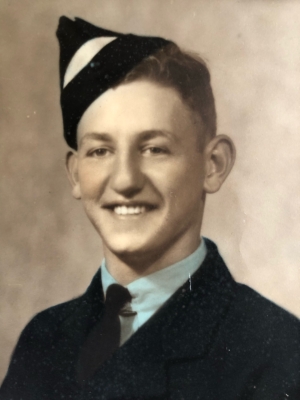
Norm Macqueen served with Bomber Command of the RAAF. He and wife Shirley moved to Lot 74 in 1966 after having run a dairy farm at Bicheno, Tasmania.
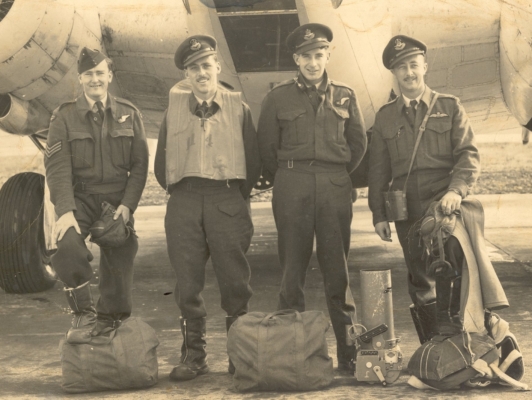
Stafford “Staf” Castledon (third from left) served as a pilot in the RAAF rising to rank of Flight Lieutenant. He, wife Lee and family moved onto Lot 59 in 1965-66 after having worked on properties in NSW.