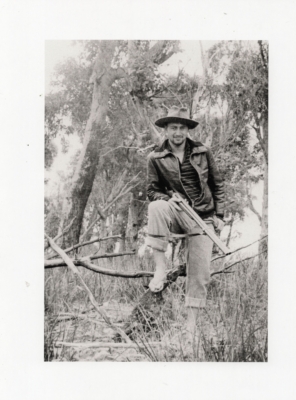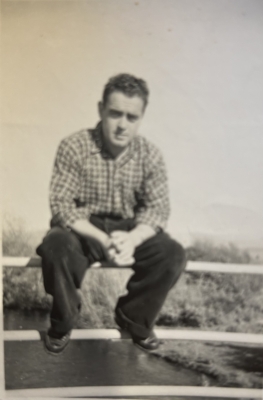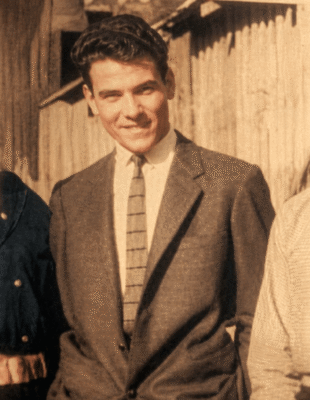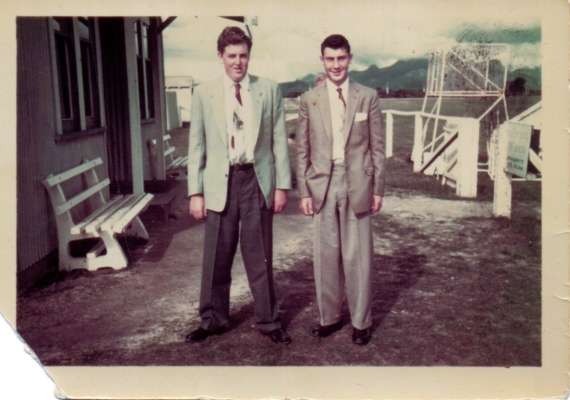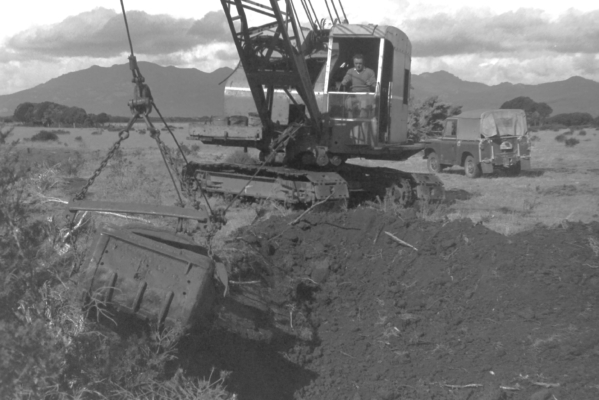
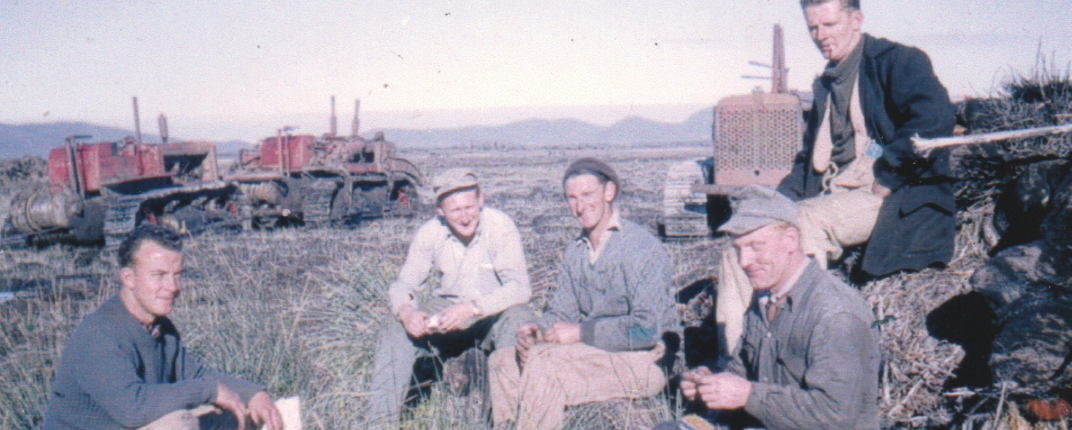
Ditching Gang 1960, photo taken by worker, David Henning.
Working at the Ag Bank
The workforce that made settlement possible
The success of the settlement depended on the labour of many:
- returned soldiers working the land
- immigrant labour
- prison labour
- local farm workers and contractors
- men and women, often older children
Through their labour, machinery and skill, these people helped transform the island’s landscape into productive farmland.
“It took people from many backgrounds to turn the scrub and lagoons into farms.”
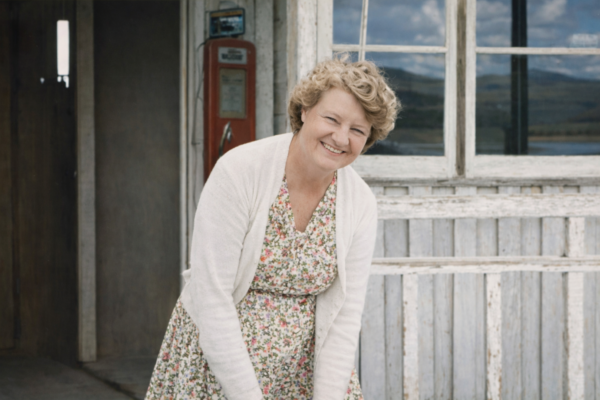
Hazel McMahon, shopkeeper at Summer Camp and later Project Clerk in the Whitemark Works Office.
She was also a wife and mother.
Migrant Workers of the Settlement
Migrants brought technical skills, labour, and resilience. Many had survived war, displacement, and separation from family. Some had travelled through migrant camps before finding work on Flinders Island.
At Summer Camp, men from Italy, Germany, the Netherlands and other parts of Europe worked alongside Australians to clear bushland, drain swamps, build roads and prepare farms for returning servicemen.
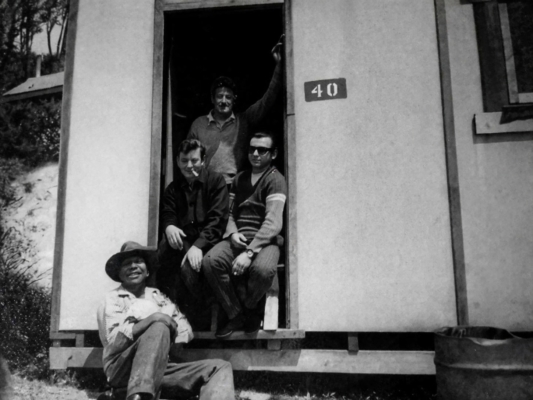
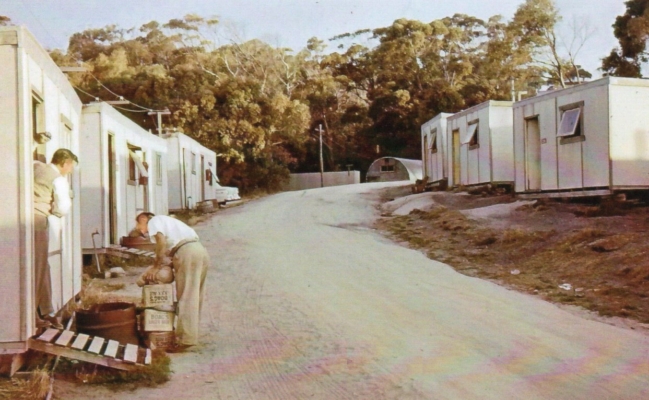
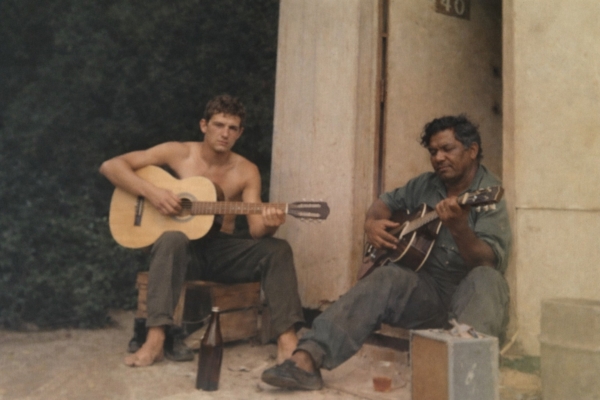
Life at Summer Camp was basic and isolated. Workers lived in huts, shared meals, and laboured long hours in difficult conditions. Yet friendships formed across languages and cultures, and many migrants remembered their time on the island with pride.
Their work not only shaped the landscape but also helped build the multicultural foundations of our local community, and indeed modern Australia.
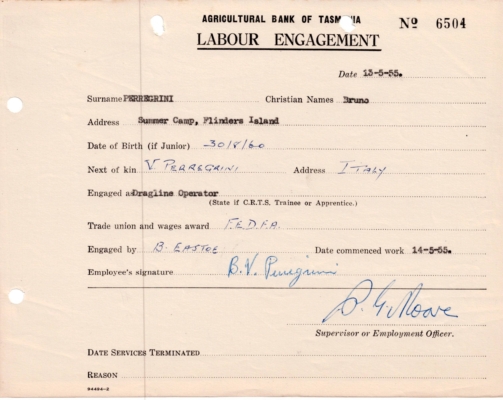
Labour Engagement form.
These were used as proof of employment. This one belongs to Bruno Perry
“They were top tradesmen and very good workers.”
- Bob Mainwaring, Soldier Settler and author
“Being a foreigner I was supposed to speak every language! No matter who came, they would say “Send him to Bruno.”
- Bruno (Peregrini) Perry
“I was only eighteen and didn’t know anyone… I just took a chance.”
“Watch, learn and then do it.”
- Joe Pitisano